
THE RESERVE
The Reserve is where our best material goes. Before anything reaches the general collection, we pull the standout
pieces aside, and this is where they land: rare, gallery-grade mineral specimens picked one at a time for their
crystals, their locality, and a level of condition that's hard to come by. If you're after fine mineral specimens for
sale rather than a decorative stone, this is the place to start
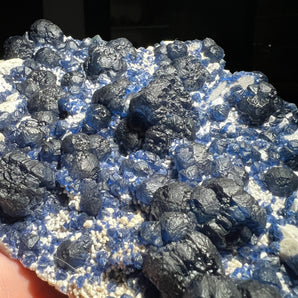
...What earns a place here comes down to a handful of things collectors care about, and they aren't the things that sell a pretty shelf piece. We look at the crystals first: the luster, the color, how they're terminated, the habit. Then locality, which for a serious collector can matter as much as the species itself. After that it's the look of the whole piece, the way the crystals sit on their matrix, the size, the presence it has in a room. And condition, always, because a chip or a bruised termination is the quickest way a fine specimen slips back to an ordinary one. A bright, undamaged Vanadinite from Mibladen, or a sharp Fluorite from a pocket that's already been mined out, sits in a different league from a common example, and that's the line we draw.
Locality is worth dwelling on, because it's the part newer collectors tend to miss. You're buying the mine as much as the mineral. Sar-e-Sang Lapis, Yaogangxian Fluorite, Mibladen Vanadinite: names like those carry a provenance you can't recreate once the pocket is finished, and a lot of what's in The Reserve comes from finds that simply aren't producing anymore. That scarcity is a big part of why the pieces hold their value.
Everything here is documented. Every specimen is identified and recorded when it arrives, and its species, locality and measurements are listed right on its product page, so there's no guessing about what you have or where it came from. We buy mine-direct and from suppliers we've worked with for years, and we won't put a locality on a piece we can't back up.
A word on looking after them. Fine minerals aren't all tough. Some are soft, some cleave if you handle them wrong, and a few fade in the sun (Amethyst is the usual culprit), so anything you should know is on the listing itself. As a rule, keep them out of direct sunlight, pick them up by the matrix instead of the crystals, and dust with a soft brush rather than water unless the species can take it.
And if there's something you want that isn't listed, get in touch and we'll go looking. Tell us the species, locality or size you're after and we'll try to track it down.



FAQ
Frequently Asked Questions
What makes a mineral specimen valuable?
Mostly locality, crystal quality, aesthetics, size and condition, with rarity and provenance usually doing the heavy lifting.
A common species from a famous, worked-out mine can be worth far more than a rarer species from an everyday source. Clean, well-formed crystals on a good matrix are what hold value.
Are the Reserve specimens documented?
Yes. Every piece is identified and recorded when it comes in, and its species, locality and measurements are listed on its product page, so you always know exactly what you own and where it's from
Where do your specimens come from?
Mine-direct and from suppliers we've known for years, from localities all over the world. The exact source is on each listing, whether that's Moroccan Vanadinite, Chinese Fluorite or Afghan Lapis.
How should I care for a fine specimen?
Keep it out of direct sun, handle it by the matrix rather than the crystals, and dust it gently with a soft brush. Go easy on water with soft or soluble species. Anything piece-specific is noted on its listing.
Can you find a specimen I don't see listed?
Often, yes. If you're after a particular species, locality or size, send us a note and we'll see what we can turn up.


